

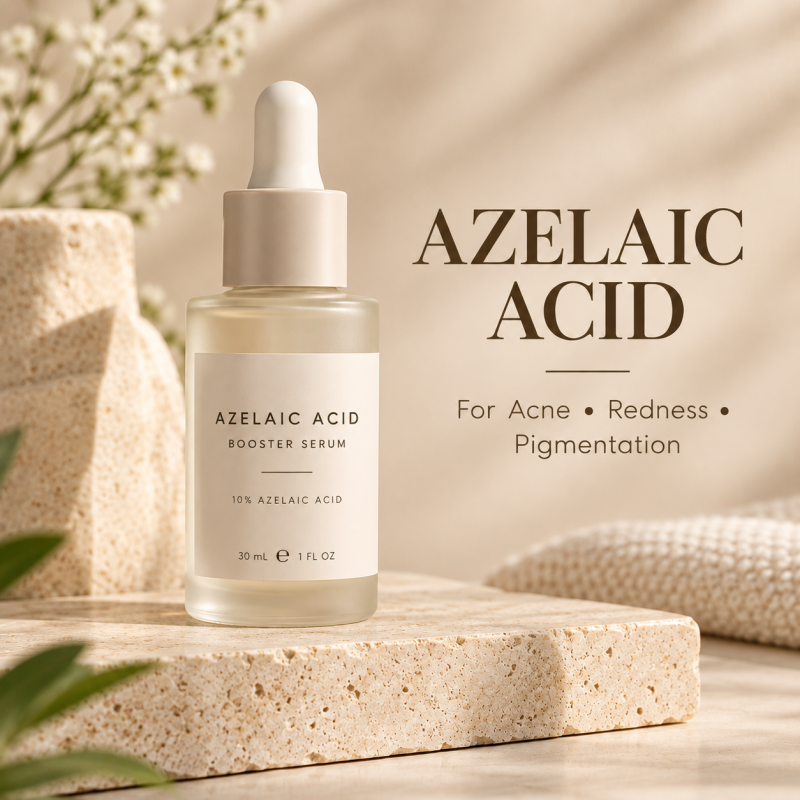
AZELAIC ACID: The Underrated Ingredient for Acne, Redness & Pigmentation
You’ve probably heard plenty about retinol, vitamin C and niacinamide—but azelaic acid deserves a place in the conversation too.
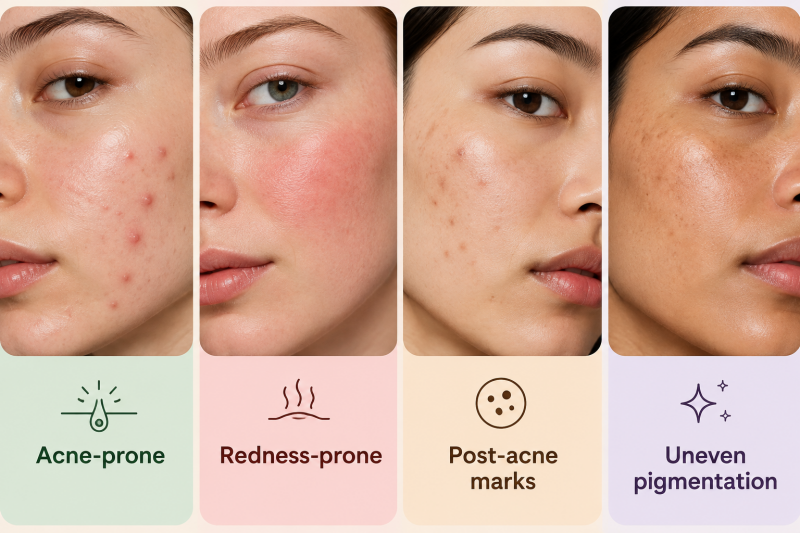
This multitasking ingredient is particularly interesting because it can target several common skin concerns at the same time: breakouts, redness, post-acne marks and uneven pigmentation. And unlike some stronger actives, it can often be incorporated into routines for sensitive or redness-prone skin.
WHAT IS AZELAIC ACID?
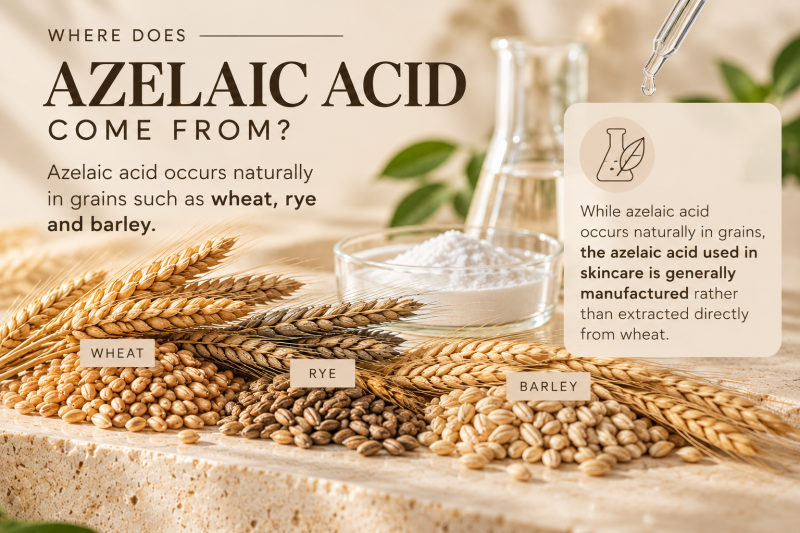
Azelaic acid is a naturally occurring dicarboxylic acid. It can be found naturally in grains such as wheat, rye and barley, although the azelaic acid used in skincare products is generally manufactured for purity and consistency.
Despite having “acid” in its name, it doesn't behave exactly like the exfoliating AHAs and BHAs you may be familiar with.
Azelaic acid has anti-inflammatory, antimicrobial and keratinization-normalizing properties, which helps explain why it can be useful for several seemingly different skin concerns.
WHY IS AZELAIC ACID SO INTERESTING?
ACNE & CLOGGED PORES
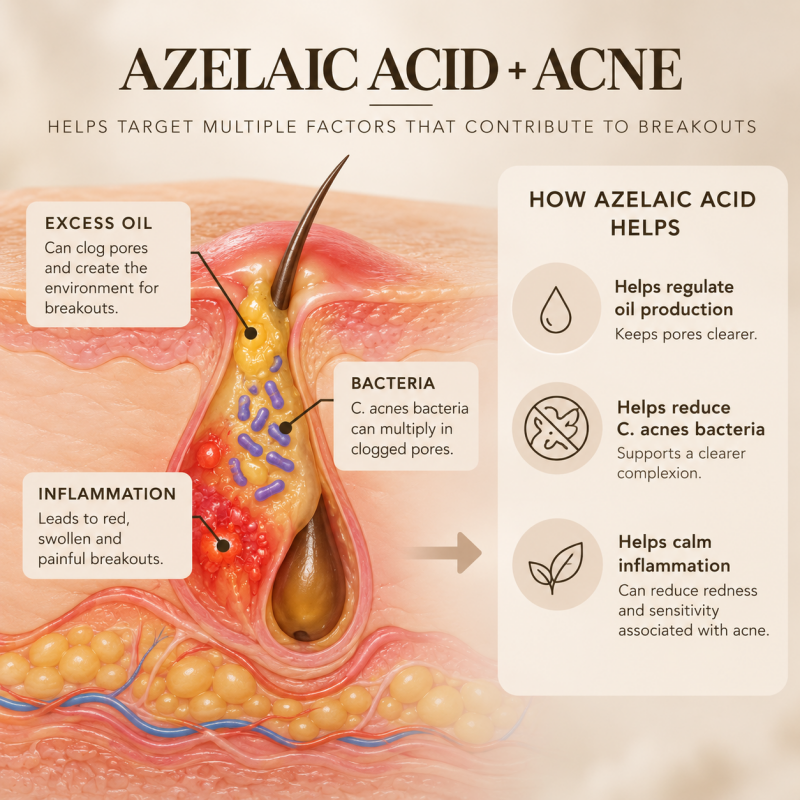
Azelaic acid can help normalize the way skin cells shed inside the follicle, helping reduce the buildup that contributes to clogged pores.
It also has antimicrobial and anti-inflammatory activity, making it particularly useful when breakouts involve both congestion and inflammation.
This is why azelaic acid is used in the management of mild-to-moderate acne.
POST-ACNE MARKS & HYPERPIGMENTATION
This is where azelaic acid becomes especially interesting.
Azelaic acid can interfere with tyrosinase, an enzyme involved in melanin production. By helping regulate excess pigment production, it can gradually improve the appearance of uneven pigmentation and the dark marks that remain after acne.
In other words, it can address both the breakout and some of the pigmentation the breakout leaves behind.
WHAT STRENGTH SHOULD YOU LOOK FOR?
You may see azelaic acid in different concentrations.
Around 10% is common in cosmetic skincare products and is a good introduction for many people.
15–20% concentrations are commonly associated with therapeutic products and have stronger clinical evidence for conditions such as acne and rosacea. Availability and whether a product requires a prescription depend on where you live.
Higher percentage doesn't automatically mean better for every skin type. Tolerance, formulation and consistency matter too.
WHAT CAN YOU USE WITH AZELAIC ACID?
One advantage of azelaic acid is that it can fit into many skincare routines.
It may be paired with ingredients such as:
Niacinamide — a great combination when barrier support, redness and uneven tone are concerns.
Hyaluronic acid — adds hydration without competing with azelaic acid.
Vitamin C — both can be used in a pigmentation-focused routine, although sensitive skin may do better separating them between morning and evening.
Retinoids — they can complement each other for acne and pigmentation, but introducing too many active ingredients simultaneously can cause unnecessary irritation.
AHA/BHA exfoliants — technically they can coexist, but layering multiple acids isn't always necessary. Sensitive skin may benefit from alternating them rather than using everything in the same routine.
DOES AZELAIC ACID CAUSE IRRITATION?
It can.
Especially when first introduced, some people experience tingling, itching, dryness or mild irritation. Starting slowly and supporting the skin barrier with a gentle moisturizer can make the transition easier.
More isn't necessarily better. If your routine already contains several exfoliating or stimulating ingredients, adding another active may increase irritation rather than improve your results.
WHEN SHOULD YOU USE IT?
Azelaic acid can generally be used morning or evening, depending on the product and the rest of your routine.
A simple routine might look like:
Cleanse → Azelaic Acid → Moisturizer → SPF in the morning
Start a few times per week if your skin is sensitive and gradually increase according to tolerance and the directions for your specific product.
AND DON'T FORGET SUNSCREEN
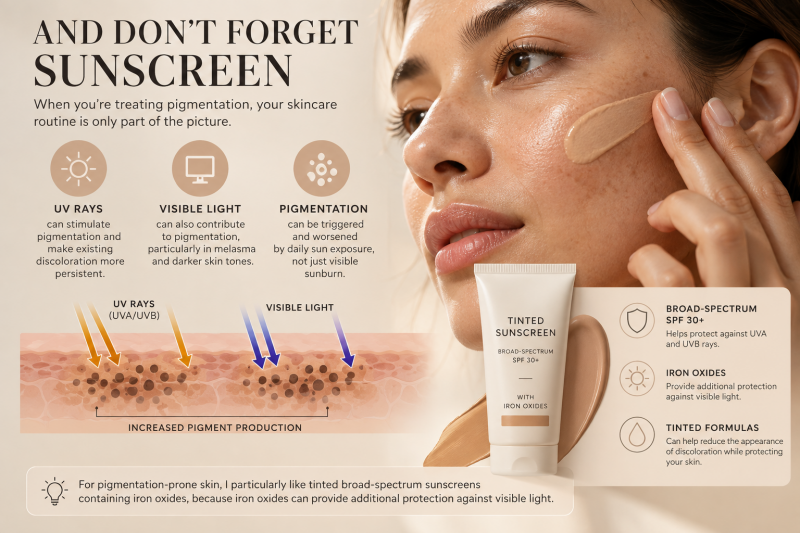
When you're treating pigmentation, your skincare routine is only part of the picture.
UV exposure can stimulate pigmentation and make existing discoloration more persistent. Visible light can also contribute to pigmentation, particularly in melasma and darker skin tones.
For pigmentation-prone skin, I particularly like tinted broad-spectrum sunscreens containing iron oxides, because iron oxides can provide additional protection against visible light.
THE A.T. ALTERNATIVE WELLNESS PERSPECTIVE
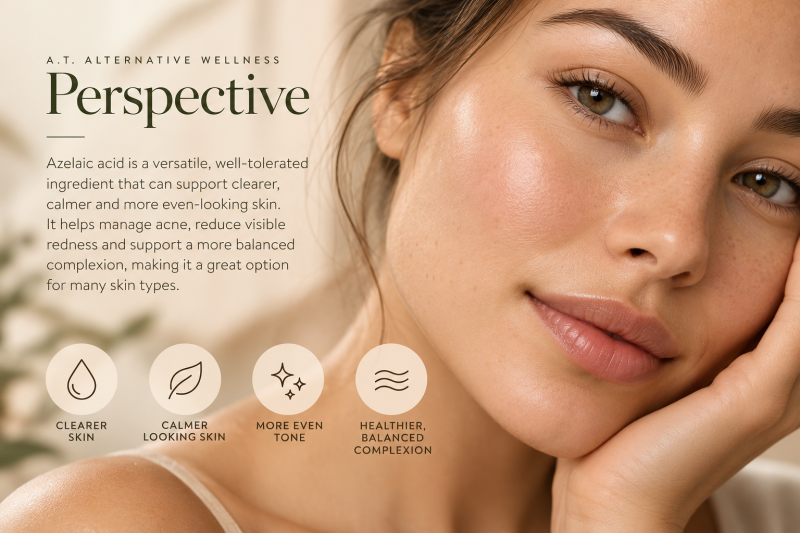
Azelaic acid is one of those ingredients I feel deserves more attention. It may not have the same popularity as retinol or Vitamin C, but its ability to address breakouts, redness and uneven pigmentation makes it an incredibly versatile addition to the right skincare routine.
In my practice, I always look at the skin as a whole rather than focusing on a single concern. Acne may leave pigmentation behind, redness may be connected to inflammation and an impaired skin barrier can make even beneficial ingredients difficult to tolerate.
That’s why choosing the right active is only part of the process. The concentration, formulation, frequency of use, supporting products and daily sun protection all matter.
Healthy skin isn’t about using the strongest products or the greatest number of actives. It’s about understanding what your skin needs and creating a routine that supports it consistently.
Not sure if azelaic acid is right for your skin?
Send me a message and I can help you better understand which ingredients may complement your individual skin concerns.
A.T. Alternative Wellness
Where professional skincare meets a personalized approach.