

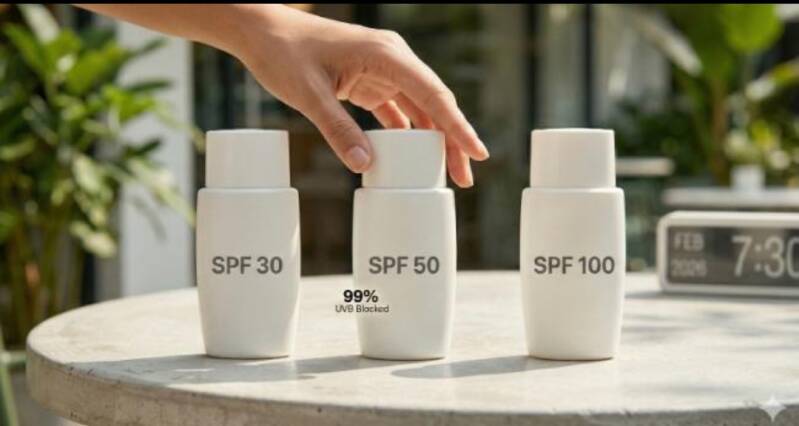
SPF 30, 50 or 100 — What Does It Actually Mean?
We all know sunscreen is important. But when you're standing in front of a shelf looking at SPF 30, 50, 70 or 100, it can get a little confusing.
Does SPF 100 mean twice the protection of SPF 50? Is SPF 30 enough? And if you're wearing a higher SPF, does that mean you don't have to reapply it as often?
Not exactly.
Let's make SPF a little easier to understand.
First, What Is SPF?
SPF stands for Sun Protection Factor.
Simply put, the SPF number tells us how much protection a sunscreen provides against UVB rays—the rays most responsible for causing sunburn.
But here's something that's often misunderstood:
SPF isn't really a timer.
SPF 30 doesn't mean you have exactly 30 times longer in the sun, and SPF 100 doesn't mean you can apply it once in the morning and forget about it for the rest of the day.
Your sunscreen can wear away from sweating, swimming, touching your face, toweling off and simply going about your day.
So What's the Difference Between SPF 30, 50 and 100?
This is usually the part that surprises people.
When sunscreen is applied properly:
SPF 30 filters about 97% of UVB rays.
SPF 50 filters about 98%.
SPF 100 filters about 99%.
Looking at those numbers, you might wonder:
"Then why bother going higher than SPF 30?"
Because there's another way to look at it.
SPF 30 allows about 3% of UVB rays through.
SPF 50 allows about 2% through.
SPF 100 allows about 1% through.
So SPF 100 doesn't give you twice the percentage of protection of SPF 50—but it does allow roughly half as much UVB through when it's applied correctly.
The important thing to remember is that no sunscreen gives you 100% protection.

Does Higher SPF Mean I Can Stay in the Sun Longer?
This is where many of us get SPF wrong.
You shouldn't think:
"I'm wearing SPF 100, so I'm covered all day."
Think of sunscreen more like a protective layer that needs to be maintained.
If you're spending time outdoors, swimming or sweating, you'll need to reapply it. A higher number doesn't mean the sunscreen stays on your skin longer.
And this is why how you use your sunscreen can be just as important as the SPF number you choose.
But SPF Is Only Part of the Story
Remember our last Skin Lab where we talked about UVA and UVB rays?
This is where that becomes important.
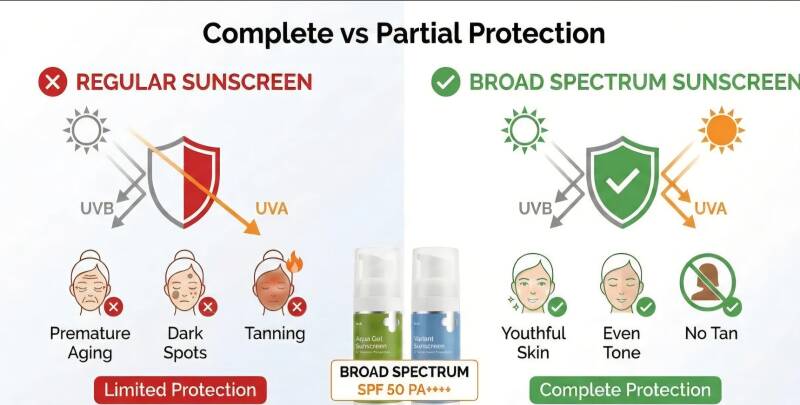
The SPF number mainly tells us about UVB protection.
But we also want protection from UVA rays—the rays that penetrate deeper into the skin and contribute to premature aging, pigmentation and changes in collagen and elastin over time.
That's why I don't want you to look only at the big SPF number on the front of the bottle.
Look for the words:
BROAD SPECTRUM
That tells you the sunscreen is designed to provide protection from both UVA and UVB rays.
What About Mineral vs. Chemical Sunscreen?
You've probably heard people say that mineral sunscreen is better than chemical sunscreen—or the other way around.
It really doesn't need to be that complicated.
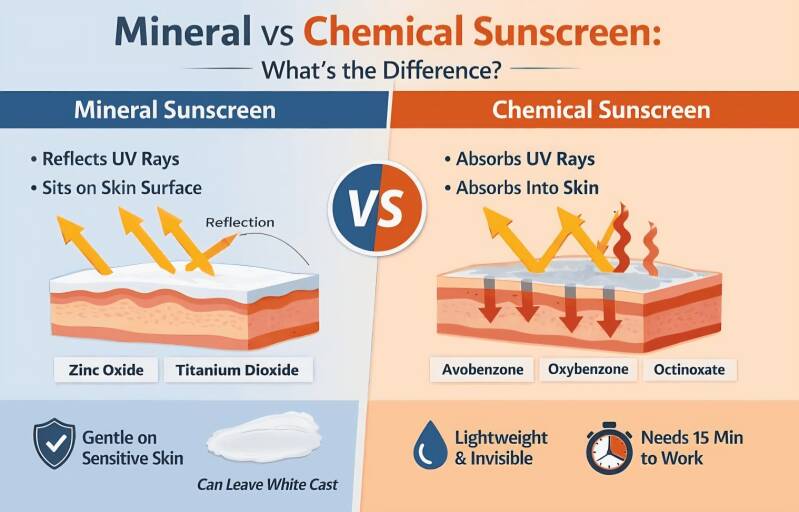
Mineral sunscreens commonly use ingredients such as zinc oxide and titanium dioxide.
Other sunscreens use different UV-filtering ingredients, often referred to as chemical filters.
Both types can provide effective sun protection when they're properly formulated and used correctly.
What matters most?
Choose a sunscreen your skin likes and that you're actually going to wear.
Because the “perfect” sunscreen sitting in your bathroom isn't protecting your skin.
The one you comfortably wear every day is.
How Much Should You Apply?
Here's another reason people may not get the protection written on the bottle:
We often don't apply enough.
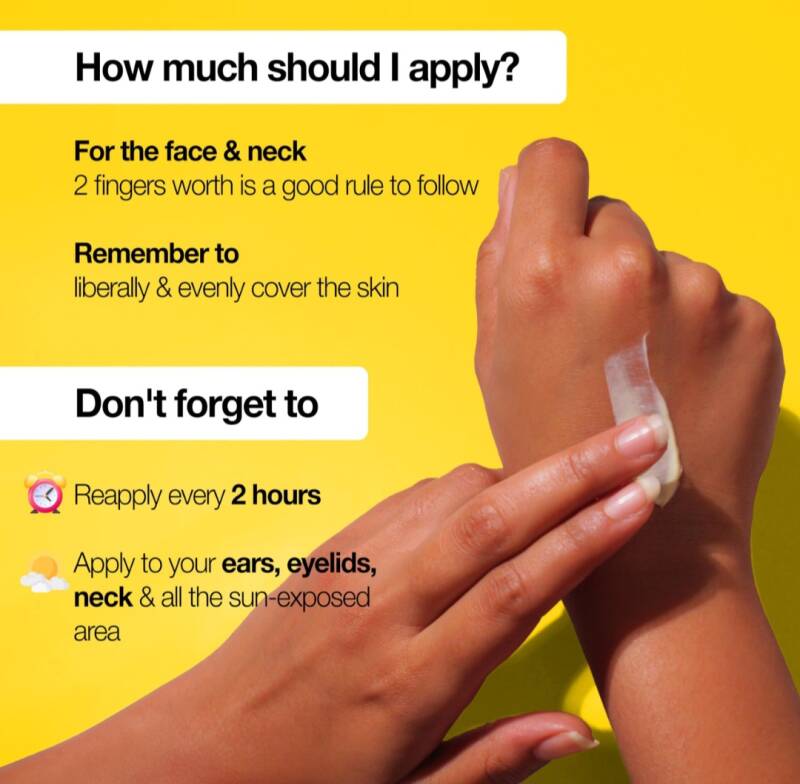
For your face and neck, a simple guideline is the two-finger method.
Place a line of sunscreen along the length of your index and middle fingers. This gives you an easy visual reminder of approximately how much you may need for your face and neck.
And don't forget the areas we often miss:
Your ears, hairline, sides of the face, neck and upper chest if they're exposed.
Do I Really Need Sunscreen When It's Cloudy?
Yes.
You don't need to feel the heat of the sun or get a sunburn for your skin to be exposed to UV radiation.
UVA rays are present during daylight hours, can travel through clouds and can also pass through window glass.
That's why sun protection isn't something I think of as just a summer or beach-day habit.
If you're trying to prevent premature aging, uneven pigmentation and accumulated sun damage, it makes much more sense to think of sunscreen as part of your everyday skincare routine.
So... SPF 30, 50 or 100?
Rather than getting too caught up in finding the biggest number on the bottle, start with the basics:
Choose SPF 30 or higher.
Make sure it says broad spectrum.
Apply enough.
Reapply when you're spending extended time outdoors, swimming or sweating.
And most importantly, find one you actually enjoy wearing.
Because sunscreen only works when it's on your skin.
My Personal SPF Preference
For me personally, I prefer a tinted mineral SPF 40+. I love that it gives my skin a natural, healthy-looking glow while also giving me the daily sun protection I'm looking for.
The tint is another feature I really like. Tinted mineral sunscreens often contain iron oxides, which provide the tint and can also help protect against visible light—something that can be especially relevant if you're concerned about pigmentation or melasma.
But just like skincare, sunscreen isn't one-size-fits-all. Your skin type, pigmentation concerns, lifestyle, how much time you spend outdoors and even how you like your sunscreen to feel can make a difference in what you'll actually enjoy wearing every day.
Not sure which SPF is right for your skin?
Feel free to contact me. I'd be happy to help you choose an SPF that works with your skin, your concerns and your daily routine.
Because the best sunscreen isn't necessarily the one with the biggest number—it's the one you'll actually enjoy wearing consistently.
A.T. Alternative Wellness