


Vitamin C: What Does It Actually Do for Your Skin?
You wear sunscreen every morning - but is there something else your morning routine could be doing to help protect your skin from environmental damage?
After learning about UVA and UVB rays, Vitamin C is the perfect ingredient to talk about next.
Vitamin C is one of the most researched antioxidants used in skincare. But like most skincare ingredients, simply seeing “Vitamin C” written on the bottle doesn't necessarily tell you whether the product is right for your skin.
So let's break it down.
What Can Vitamin C Do for Your Skin?
☀️ Provides Antioxidant Support
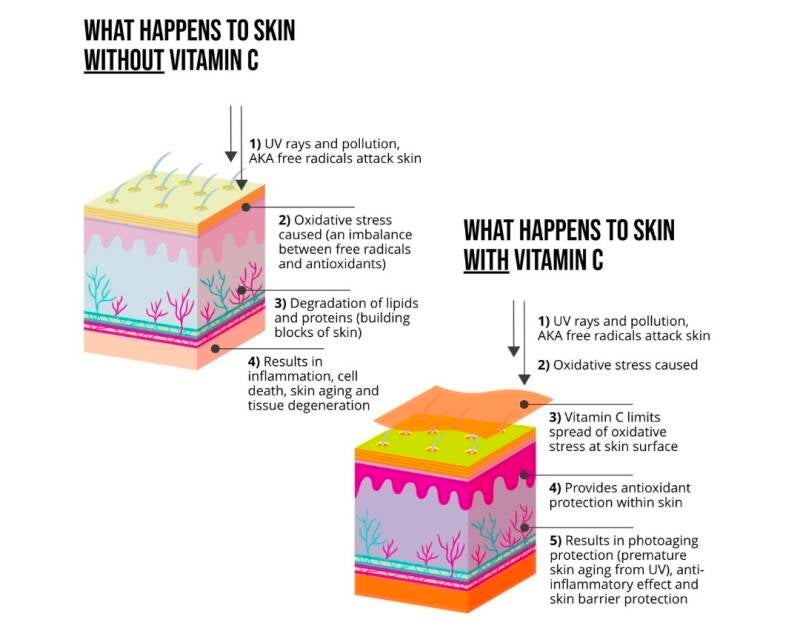
Vitamin C helps defend the skin against oxidative stress caused by environmental exposure.
This is one reason I often like Vitamin C as part of a morning skincare routine underneath sunscreen.
✨ Helps Brighten Uneven Skin Tone
Vitamin C can help improve the appearance of dullness and uneven pigmentation.
It can interfere with processes involved in melanin production, which is why it is commonly found in products designed for dark spots and uneven tone.
🧬 Supports Collagen
Vitamin C also plays an important role in normal collagen production.
As we age, collagen production naturally declines, while UV exposure and other environmental factors can contribute to collagen breakdown.
Using an appropriate Vitamin C product consistently can be one part of a long-term approach to maintaining healthier-looking skin.

Not All Vitamin C Is the Same
This is where skincare gets interesting.
You may see several different forms of Vitamin C on product labels.
One of the best-known forms is:
L-Ascorbic Acid
This is the biologically active form of Vitamin C and has been extensively studied in topical skincare.
However, it can also be unstable and may cause irritation in some skin types—particularly at higher concentrations.
There are also Vitamin C derivatives designed to offer greater stability or potentially better tolerability.
This is why choosing a Vitamin C product shouldn't be based only on finding the highest percentage.
Stronger doesn't automatically mean better.
The best product is the one that is appropriate for your skin and that you can use consistently.
When Should You Apply Vitamin C?
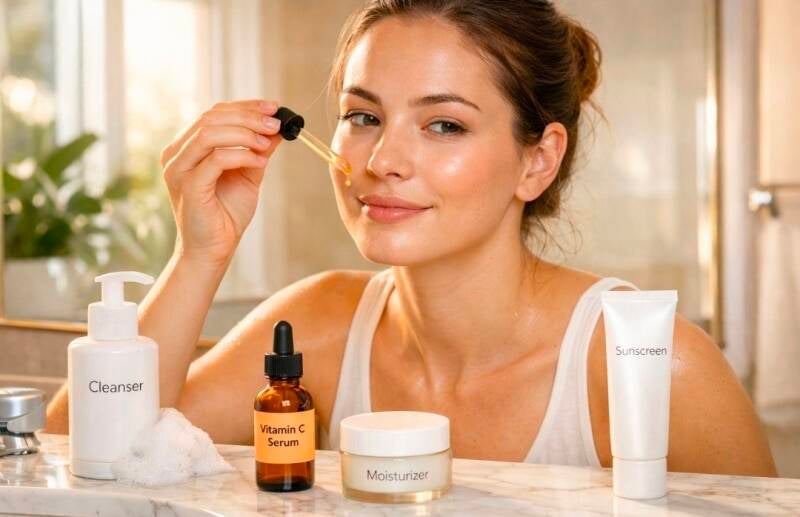
Vitamin C can be used at different times depending on the formulation, but it is commonly incorporated into a morning routine.
A simple routine might look like:
Cleanser → Vitamin C serum → Moisturizer → Broad-spectrum SPF
And yes—SPF is still the most important part of that morning routine when we're talking about UV protection.
What Percentage Should You Look For?
This depends on the form of Vitamin C, the formulation and your skin.
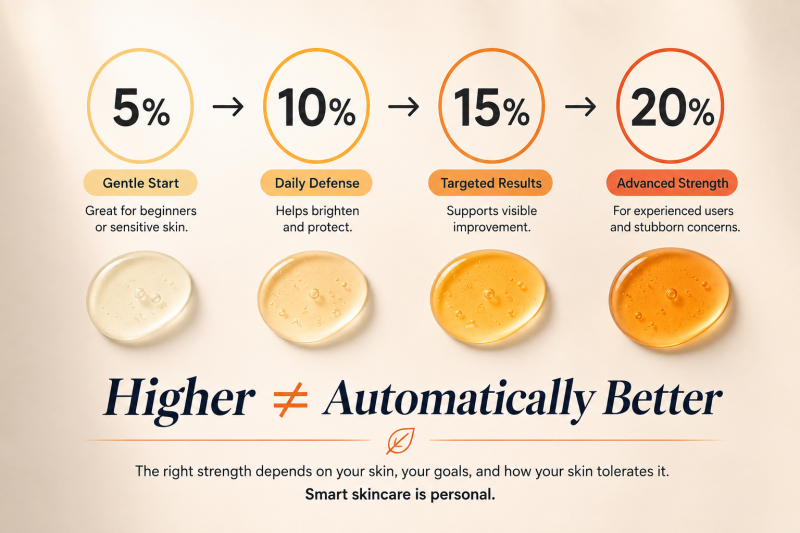
You may see L-ascorbic acid products in concentrations such as 5%, 10%, 15% or 20%.
But don't assume 20% automatically gives you twice the benefit of 10%.
Higher concentrations may also increase the possibility of irritation.
Sensitive or reactive skin may benefit from starting with a gentler formulation rather than immediately choosing the strongest product available.
How Do You Know If Your Vitamin C Has Gone Bad?
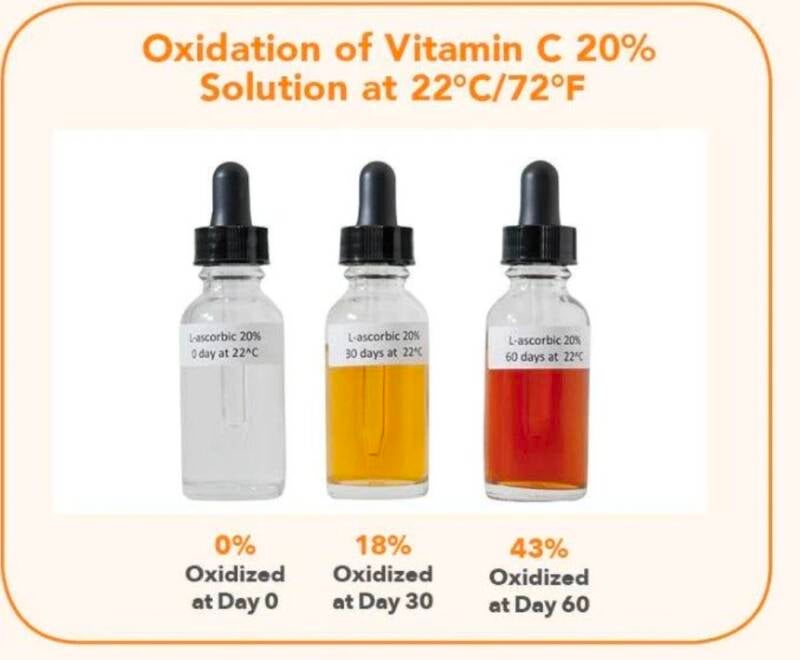
Vitamin C—particularly L-ascorbic acid—is sensitive to things such as light, heat and air.
Pay attention to your serum.
If a product that was originally clear or pale begins becoming significantly darker, orange or brown, it may be oxidizing.
Packaging matters too.
Dark or opaque containers and packaging that limits exposure to air can help protect unstable ingredients.
Do You Need Vitamin C?
Not necessarily.
And this is something I want people to understand about skincare:
You don't need every popular ingredient.
Your skincare routine should be based on your skin type, concerns, sensitivity, lifestyle and what you're already using.
Sometimes adding another active ingredient improves a routine.
Other times, simplifying the routine is exactly what the skin needs.
At A.T. Alternative Wellness, my approach to skincare isn't about following every new trend or filling your shelf with products.
It's about understanding your skin and choosing what actually makes sense for it.
Next in the Ingredient Lab: